India Is Not Waiting Anymore. The Question Is Who’s Steering.
The momentum is real. The ambition is visible. What is still unresolved is whether any of it is being coordinated toward something larger than itself.
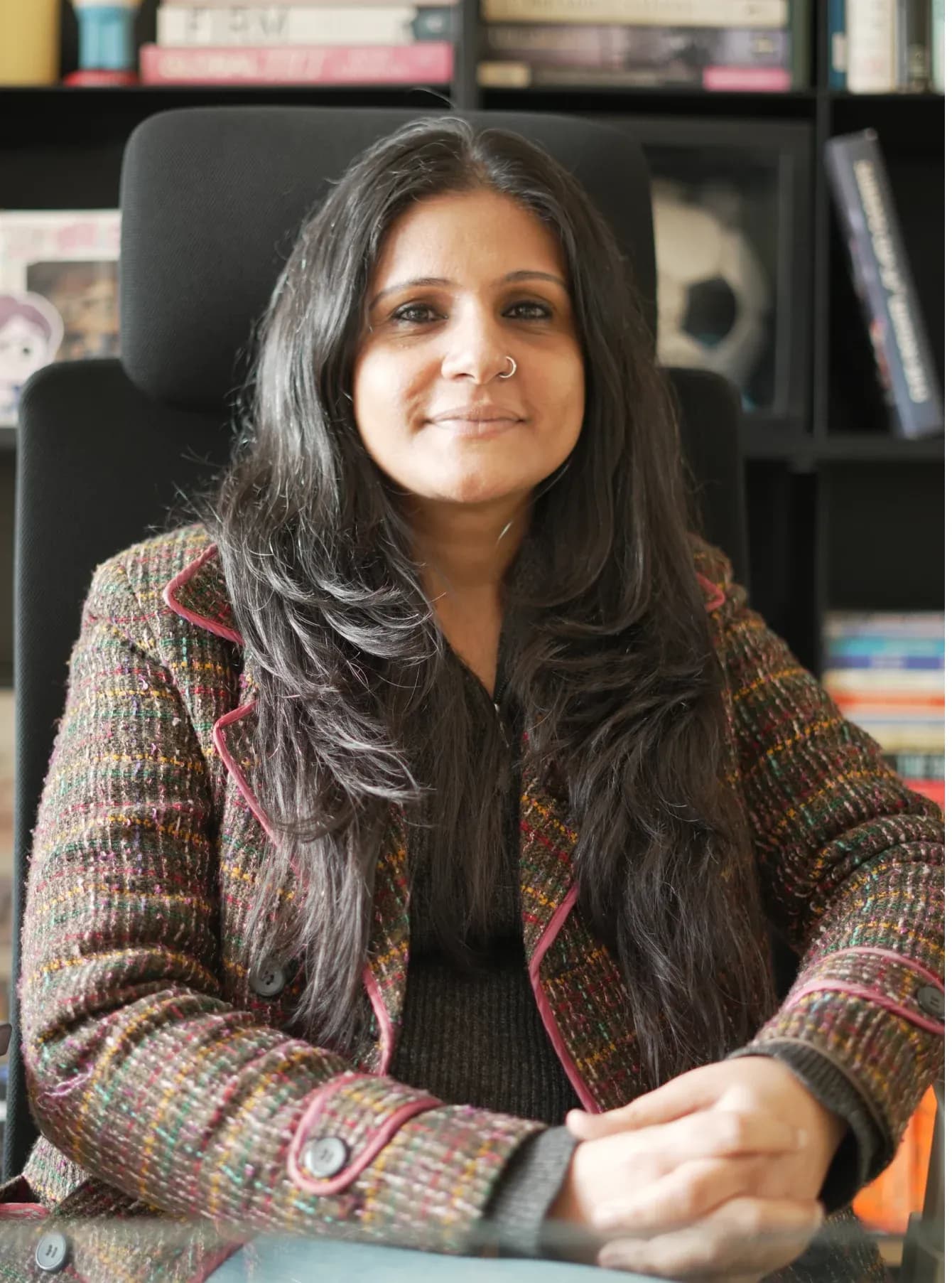
Sakshi Anand
Senior media and communications professional
I have sat across from some of the sharpest minds shaping India’s future. What strikes
me, every time, is not what they know. It is how rarely they are in the same room as each
other. The person building the policy has not spoken to the person deploying the
technology. The capital allocator has not met the researcher whose work could change
the calculus entirely. Everyone is moving fast, and almost no one is moving together.
That is the problem I keep coming back to. Not a shortage of ambition, not a shortage of
talent, not even a shortage of capital. A shortage of alignment. And in a country moving
at India’s speed right now, misalignment at scale is not just inefficient — it is a cost we
cannot keep affording.
Growth, in isolation, is not a strategy. It is an outcome. And the real question — the one
I believe we are not asking loudly enough — is far more fundamental: what kind of
country will that growth create?
Will we become a high-productivity industrial power, or remain a low-cost
economy competing on margins rather than value?
Will artificial intelligence amplify human capability at scale, or deepen the
inequalities we have not yet resolved?
Can we achieve energy security while leading the global climate transition or
will we be forced to choose between growth and sustainability?
Will healthcare evolve into a preventive, system-led model, or continue to be
reactive and access-driven?
And perhaps the most important question: who is thinking about all of this
together?
That last question is why I am here. That last question is why One Big Future exists.
The Gap I Keep Seeing
In my work as an editor and in the conversations I have been part of over the years, one
pattern has stayed with me more than any other. The people who shape India's future
are rarely in the same room. Technology leaders speak to technology leaders.
Policymakers move within policy circles. Investors operate inside their own frameworks
of risk and return. Academia produces knowledge that too rarely escapes into systems.
Industry executes within defined boundaries.
Each of these conversations is valuable. None of them, alone, is sufficient.
“The future of a nation is not built in silos. It is shaped at the intersection where
technology influences policy, policy shapes markets, markets drive capital, and
capital determines what gets built and what does not.”
And yet we rarely create spaces where those intersections are explored with genuine
intent. We make decisions that will define decades but we do not always think about
them collectively, or far enough ahead. That is the gap One Big Future is built to
close.
Why I Believe in This
I want to be honest about what drew me to this. It was not a grand strategic calculation.
It was something more personal; a growing discomfort with the fragmented way we talk
about India's future, and a conviction that we can do better.
I have watched brilliant thinking evaporate because it never found the right room. I have
watched policy get made without the people it would affect being anywhere near the
conversation. I have watched capital flow toward what is legible in the short term, while
the long-term structural questions — education, climate, healthcare, the nature of work
— get deferred, again and again, to a future that is arriving faster than we planned for.
The nature of change itself is shifting. Technological cycles are compressing. What once
took decades now unfolds in years. And every major system in education, healthcare,
manufacturing, governance is being forced to evolve faster than it was designed to.
None of these are standalone challenges. They are deeply interdependent.
And we cannot solve them in separate rooms.
What One Big Future Is, and Is Not
Let me be clear about what this platform is not. It is not another conference. It is not a
networking event dressed in the language of ideas. It is not a space for people who
already agree with each other to confirm what they already believe.
What One Big Future is attempting to build is something more difficult and, I believe,
more necessary: a long-horizon lens for India. A space where leaders, builders,
policymakers, investors, and thinkers engage with the structural questions that will
shape the next 50 years, not to predict the future, but to shape it more consciously. To
ask better questions before decisions become irreversible. To move from fragmented
thinking to aligned thinking.
The Standard I Am Holding This To
The success of One Big Future will not be defined by how many people attend, or how
impressive the speaker list is, or how much press we generate at launch. It will be
defined by the quality of thinking it enables and the extent to which that thinking
translates into action. Into policy that gets shaped differently. Into capital that flows
toward longer-term bets. Into decisions made with better information, broader
perspective, and greater awareness of consequence.
That is a high bar. I am setting it deliberately. Because India does not need more noise.
It needs better signal.
The question is no longer whether India will grow. That trajectory is already in motion.
The question is whether that growth will be shaped consciously, with clarity, alignment,
and intent or whether it will simply be the outcome of a thousand fragmented decisions
taken in isolation.
India has a rare opportunity. Not just to grow, but to define what that growth stands for.
And that requires us to pause, step back, and ask together, honestly, and with the
courage to sit with uncomfortable answers:
What kind of future are we actually building?
That is the question One Big Future exists to pursue. I am glad you are here for it.
Sakshi Anand
Senior media and communications professional
Sakshi Anand is a senior media and communications professional with nearly two decades of experience across India’s leading news and broadcast networks, including CNN-IBN, NDTV, TIMES NOW, CNBC-TV18, TV Today, Zee, and Republic Media Network. She has led strategy-driven content ecosystems that integrate editorial vision with revenue outcomes—spanning branded content, large-scale summits, IP creation, digital platforms, and partnerships. With a strong focus on business alignment, brand positioning, and sustainable monetisation, Sakshi brings a commercially astute editorial lens to building platforms that influence discourse while delivering measurable growth.
0 Comments
- No comments yet. Be the first to comment.
You Might Like
Stories and perspectives from leaders shaping India’s long-term future.